
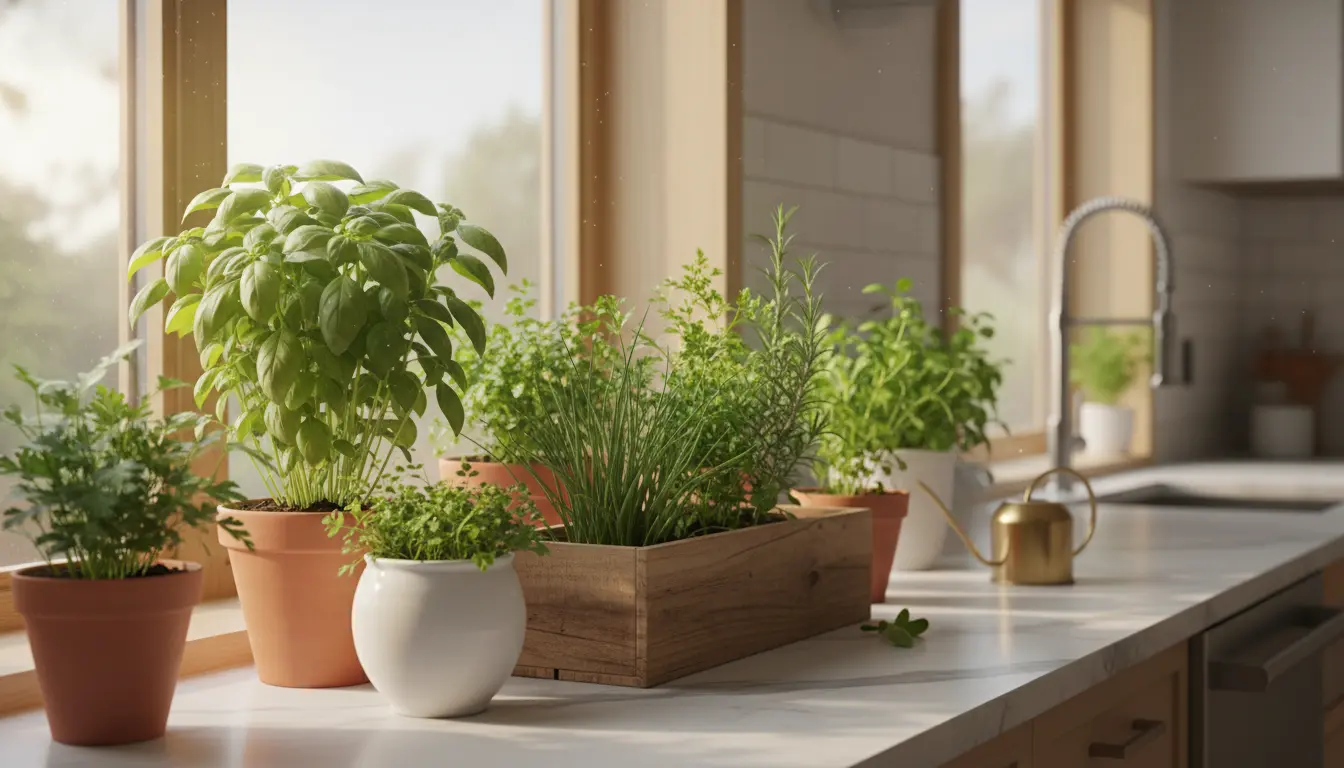
Growing herbs indoors is an easy way to add fresh flavor to meals and brighten your home. This guide explains practical steps to start an indoor herb garden and keep it healthy year-round.
Why an Indoor Herb Garden Works
An indoor herb garden saves trips to the store and gives you fresh leaves when you need them. Many common herbs need only good light, well-draining soil, and basic care to thrive indoors.

Benefits include convenience, lower cost over time, and control over growing conditions. Herbs also improve indoor air quality and can lift mood with their scent.
How to Start an Indoor Herb Garden
Follow these steps to set up a simple, productive herb garden on a windowsill or countertop.
Choose the Right Herbs for an Indoor Herb Garden
Start with herbs that do well indoors. These are forgiving and useful in cooking.
- Basil — likes bright light and warmth.
- Parsley — tolerates moderate light, slow grower.
- Mint — hardy and spreads; best in its own pot.
- Thyme — prefers bright light and drier soil.
- Chives — compact and easy to harvest.
Select Containers and Soil

Pick containers with drainage holes to prevent root rot. Size matters: small pots for compact herbs, larger pots for basil and parsley.
Use a high-quality potting mix labeled for containers. Avoid garden soil, which compacts and drains poorly indoors.
Find the Best Light for an Indoor Herb Garden
Most herbs need 6–8 hours of bright light daily. A south- or west-facing window is ideal for sun-loving herbs.

If natural light is limited, use a full-spectrum LED grow light placed 6–12 inches above the plants. Run lights 12–14 hours a day for steady growth.
Watering and Feeding
Water when the top 1–2 inches of soil feel dry. Lift pots to feel weight; lighter pots usually need water.
Fertilize lightly: use a balanced, water-soluble fertilizer at half strength every 4–6 weeks during the growing season. Too much fertilizer makes herbs leggy.
Temperature and Humidity
Most herbs thrive between 65°F and 75°F (18–24°C). Avoid placing plants near heating vents or cold drafts.
If indoor air is dry in winter, increase humidity by grouping pots, using a tray of pebbles with water, or a small humidifier.
Maintenance Tips for a Healthy Indoor Herb Garden
Consistent care keeps herbs productive. These simple tasks prevent common problems.
Pruning and Harvesting
Pinch back growing tips regularly to encourage bushy growth. Harvest leaves by cutting above a leaf node to promote new shoots.
Never remove more than one-third of the plant at once. Regular harvesting is natural pruning and keeps herbs vigorous.
Pest Control for an Indoor Herb Garden
Indoors, pests are rarer but can include aphids, spider mites, and whiteflies. Inspect plants weekly for signs of insects.
Use a spray of water to dislodge small pests, or apply insecticidal soap according to label directions. Isolate new plants for a week to avoid introducing pests.
When to Repot
Repot herbs when roots are visible through drainage holes or the plant looks crowded. Move to a pot one size larger and refresh potting mix.
Repotting in spring helps herbs recover and grow for the season ahead.
Some herbs release more essential oils and flavor when grown in bright light. Basil harvested at midday often tastes more aromatic than leaves picked in low light.
Common Problems and Quick Fixes for Indoor Herb Gardens
Recognizing issues early keeps minor problems from becoming major setbacks.
- Yellow leaves: often overwatering or poor drainage. Let soil dry and check pot drainage.
- Leggy growth: insufficient light. Move to a brighter spot or add grow light.
- Slow growth: low fertilizer or compacted soil. Feed lightly and consider repotting.
Small Case Study: Sarah’s Kitchen Window Herb Garden
Sarah had a small south-facing window and started with three pots: basil, chives, and mint. She used a quality potting mix and a tray to catch excess water.
Within six weeks she harvested basil for pesto and chives for salads. When mint began to crowd the others, she moved it to a separate pot. Regular pinching and weekly checks kept pests away.
Outcome: a consistent supply of fresh herbs and lower grocery bills for fresh greens.
Quick Checklist to Start Your Indoor Herb Garden
- Choose 3–5 beginner-friendly herbs.
- Select pots with drainage and quality potting mix.
- Place in bright light or add a full-spectrum LED grow light.
- Water when topsoil is dry and fertilize lightly every 4–6 weeks.
- Prune regularly and monitor for pests.
Starting an indoor herb garden is practical and rewarding. With the right light, soil, and routine care, you can enjoy fresh herbs at home year-round. Begin small, learn from each season, and expand as your confidence grows.