
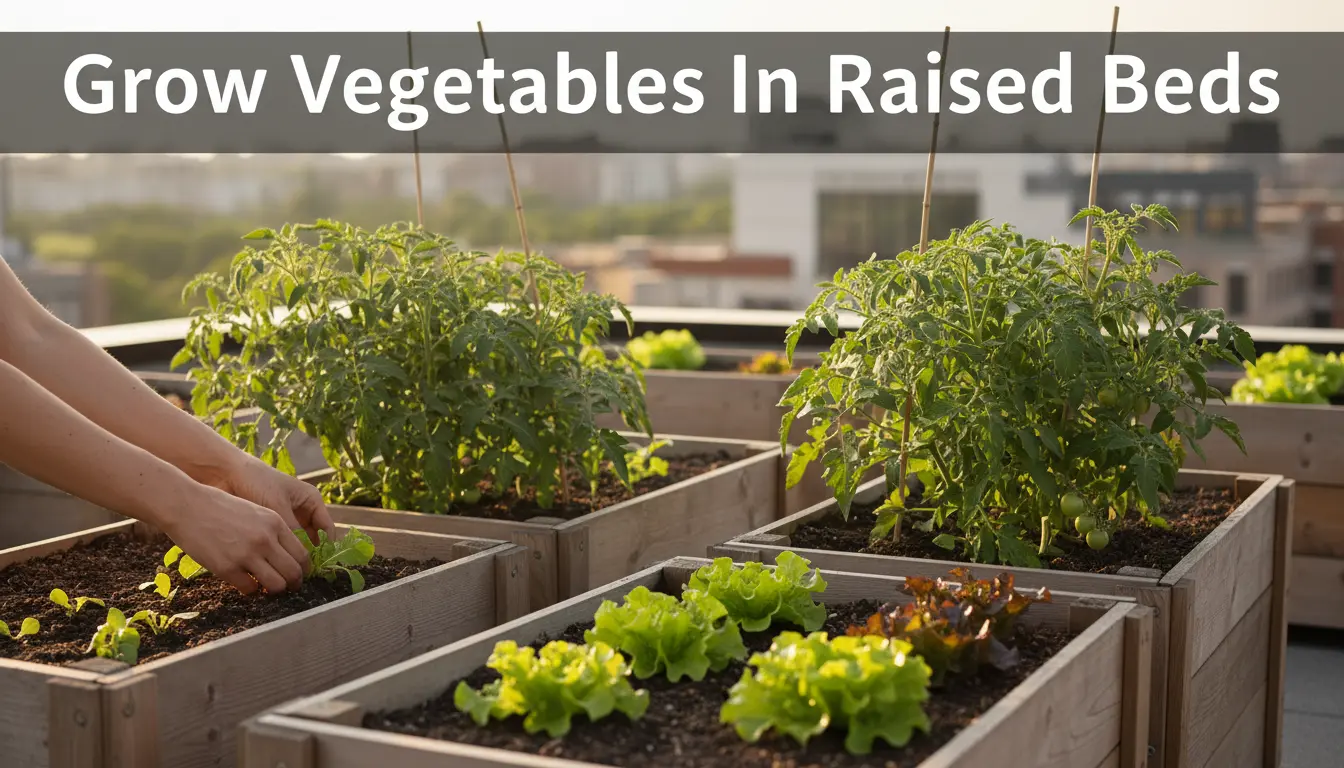
Why start a raised bed vegetable garden
Raised bed vegetable gardens concentrate soil, drainage, and nutrients in a confined area. They make planting, weeding, and harvesting easier, especially in compact or poor-soil sites.
For many gardeners, raised beds produce higher yields in less space and reduce back strain from bending over long rows.
Choose the right location for your raised bed vegetable garden

Most vegetables need 6–8 hours of direct sun per day. Pick a sunny, level spot that is easy to reach from your house.
Consider access to water and protection from strong winds or heavy foot traffic. Avoid placing beds under large trees where roots will compete for moisture and nutrients.
Sun, water, and access
- Sun: 6–8 hours of direct sun for most vegetables.
- Water: place within hose or irrigation range to reduce daily hauling.
- Access: leave 2–3 feet between beds for comfortable movement and tool access.
Design and build your raised bed vegetable garden
Raised beds can be simple wooden boxes, metal frames, or even stacked stone. The typical height is 6–12 inches for shallow roots and 12–24 inches for deeper-rooted crops.

Use rot-resistant lumber, untreated cedar, or recycled materials. Avoid chemically treated wood that can leach into soil if you plan to grow food.
Bed size and layout
- Width: 3–4 feet to reach the center from either side without stepping in the bed.
- Length: as long as practical; shorter beds are easier to irrigate and harvest.
- Path width: 2–3 feet between beds for wheelbarrow and tool access.
Soil mix for a raised bed vegetable garden
A good soil mix is the foundation of a productive raised bed vegetable garden. Use a mix of topsoil, compost, and a light, aerating ingredient like peat moss or coconut coir.
A common recipe: 50% good quality topsoil, 30% compost, 20% aeration material. Amend annually with compost and a balanced organic fertilizer.
Soil tips and testing
- Test soil pH: most vegetables prefer pH 6.0–7.0.
- Work compost in before planting and top-dress each season.
- Mulch with straw or shredded leaves to conserve moisture and suppress weeds.

Raised beds warm up earlier in spring than open ground, allowing you to start planting cold-hardy vegetables up to 2–3 weeks sooner.
Planting and crop selection for your raised bed vegetable garden
Choose crop varieties suited to your climate and space. Combine quick-growing crops like lettuce with longer-season plants like tomatoes to maximize production.
Practice spacing and succession planting: harvest a crop and quickly replace it with another to keep beds productive through the season.
Companion planting and crop rotation
- Use companion plants (e.g., basil near tomatoes) to improve flavor and deter pests.
- Rotate plant families annually to reduce disease pressure and nutrient depletion.
Watering and maintenance
Consistent watering is critical. Raised beds tend to drain faster than ground plots, so monitor soil moisture and water deeply once or twice a week depending on weather.
Consider drip irrigation or soaker hoses under mulch to deliver water efficiently and reduce foliage wetting.
Weeding and pest management
- Mulch to suppress weeds and reduce water loss.
- Remove weeds when small to prevent seed set.
- Inspect plants regularly for pests; use row covers or organic controls when necessary.
Small case study: A first-season urban raised bed vegetable garden
Case study: A 6×4-foot raised bed installed on an apartment patio produced reliable yields in its first season. The gardener used a 12-inch bed filled with a 50/30/20 soil mix and planted tomatoes, bush beans, lettuce, and herbs.
Results: three tomato plants yielded 20–25 lbs total, two rows of bush beans produced weekly harvests for six weeks, and continuous lettuce sowing provided salad greens throughout spring and fall. Time spent weekly averaged one hour for watering, harvesting, and light weeding.
Common problems and quick solutions for raised bed vegetable gardens
Yellowing leaves may indicate nutrient deficiency or overwatering. Test soil and adjust irrigation before adding fertilizers.
Pest outbreaks: use physical barriers (row covers) and hand-pick larger pests. Introduce beneficial insects by planting flowers near the beds.
Seasonal checklist
- Spring: fill beds, test soil, start early crops.
- Summer: monitor water, stake tall plants, harvest regularly.
- Fall: remove spent plants, add compost, mulch for winter.
Final tips for a successful raised bed vegetable garden
Start small and expand as you gain experience. Keep a planting calendar and notes on variety performance to improve yields over time.
Focus on soil health: invest in compost and regular organic matter additions. Healthy soil supports healthy plants and reduces pest and disease problems.
With basic planning, a raised bed vegetable garden can supply fresh produce, improve your outdoor space, and make gardening more accessible and productive.