
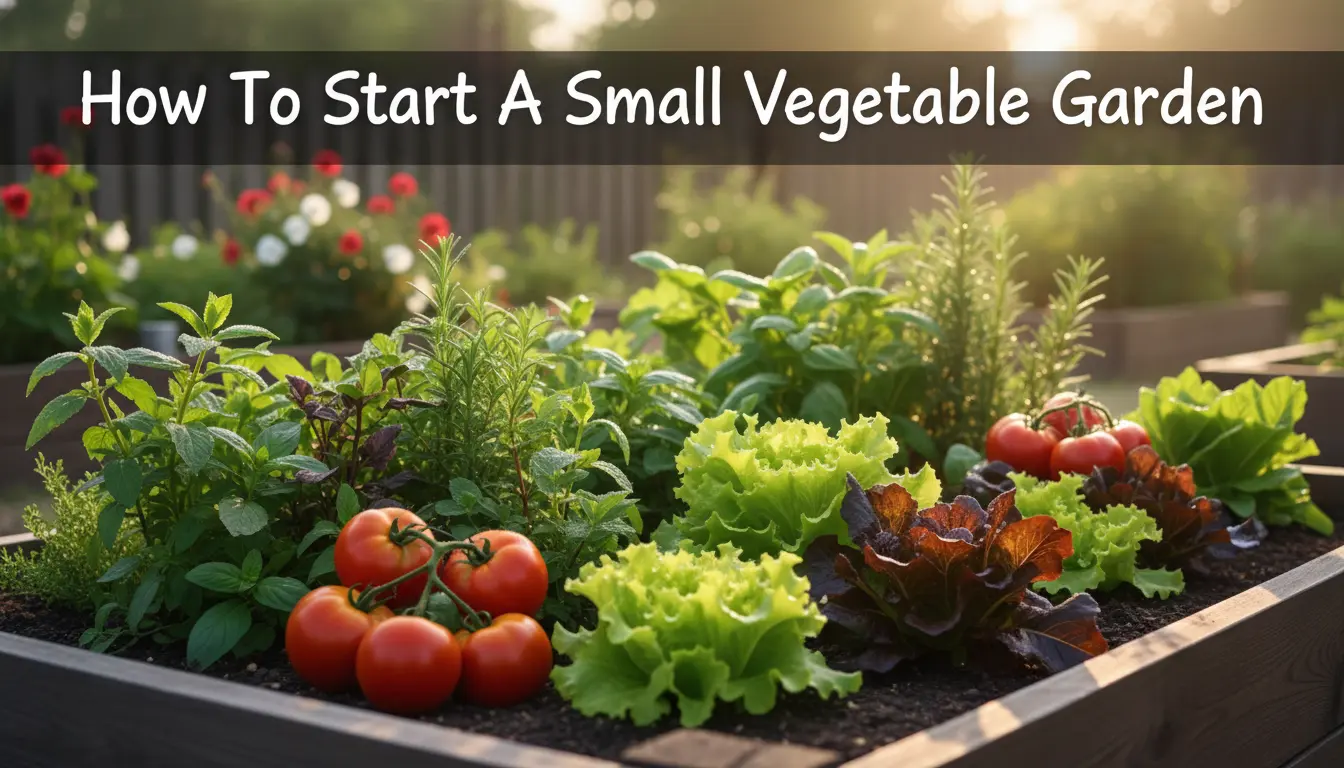
Why Start a Small Vegetable Garden
Starting a small vegetable garden is an efficient way to grow fresh food and learn practical gardening skills. It fits balconies, patios, and small backyards, and it reduces grocery costs and food miles.
Plan Your Small Vegetable Garden
Good planning saves time and improves harvest success. Begin by assessing light, space, and your goals for yield, types of vegetables, and maintenance time.
Choose the Right Location for a Small Vegetable Garden

Most vegetables need 6–8 hours of direct sunlight daily. Observe where sunlight falls in your space and mark the best spot.
Consider proximity to water and accessibility for routine care. Raised beds or containers work well if ground soil is poor.
Select Vegetables for a Small Vegetable Garden
Pick crops that match your climate, season, and available space. For small gardens, focus on high-value, space-efficient plants.
- Leafy greens: lettuce, spinach, kale
- Compact fruiting plants: cherry tomatoes, peppers
- Root vegetables: radishes, carrots (short varieties)
- Herbs: basil, parsley, chives
Prepare Soil and Containers

Healthy soil is the foundation of a productive small vegetable garden. If using containers, choose at least 12-inch depth for most vegetables.
Soil Mix for a Small Vegetable Garden
Use a mix of quality topsoil, compost, and a light mineral like perlite for drainage. A common ratio is 40% topsoil, 40% compost, 20% perlite or coarse sand.
Test soil pH if possible; most vegetables prefer 6.0–7.0. Adjust pH with garden lime (to raise) or sulfur (to lower) as needed.
Planting and Spacing in a Small Vegetable Garden

Follow seed packet or plant tag spacing recommendations. In small gardens, use intensive planting techniques to maximize yield.
Companion Planting and Succession Planting
Companion planting can improve space use and pest resistance. For example, plant basil near tomatoes to help flavor and deter pests.
Use succession planting to keep beds productive. After harvesting radishes, plant a second crop like bush beans.
Watering and Fertilizing a Small Vegetable Garden
Consistent moisture is critical. Water deeply 1–3 times per week depending on weather and container size rather than frequent shallow watering.
- Morning watering reduces disease risk.
- Mulch with straw or shredded leaves to retain moisture and suppress weeds.
- Feed plants with a balanced organic fertilizer every 3–4 weeks during the growing season.
Common Problems and Simple Solutions
Pests and diseases can quickly impact a small vegetable garden. Monitor daily and act early to limit damage.
- Aphids: spray with strong water jet or insecticidal soap.
- Fungal leaf spots: improve air circulation and remove affected leaves.
- Slow growth: check soil nutrients and water levels.
Harvesting and Storage Tips for a Small Vegetable Garden
Harvest vegetables at their peak for best flavor and to encourage more production. Regular harvesting of herbs and leafy greens often increases yield.
Store produce properly: cool, dry conditions for most vegetables; refrigerate greens in a sealed bag with a paper towel to absorb moisture.
Small Vegetable Garden Maintenance Checklist
- Check for pests and disease every 2–3 days.
- Water early in the day and adjust based on rainfall.
- Mulch yearly and top-dress with compost mid-season.
- Rotate crops seasonally where possible to reduce soil-borne disease.
Many dwarf and patio varieties are bred specifically for small gardens and can produce full-size yields in containers as small as 8–10 inches deep.
Real-World Example: Small Vegetable Garden Case Study
Case Study: Sarah converted a 4×6 foot corner of her apartment balcony into a small vegetable garden using two 4×2 raised beds. She chose compact cherry tomatoes, leaf lettuce, bush beans, and basil.
In the first season she harvested weekly greens and a steady supply of cherry tomatoes. Simple steps she followed included daily 30-minute checks, twice-weekly deep watering, and monthly compost top-dressing.
Result: Over one growing season she reduced store-bought salad purchases by half and recovered her initial cost for soil and plants within three months.
Quick Start Checklist for a Small Vegetable Garden
- Assess light and space (6–8 hours sun ideal).
- Choose 4–6 easy crops for your first season.
- Use quality soil mix and containers sized to plant needs.
- Water consistently and mulch to conserve moisture.
- Monitor pests, harvest regularly, and rotate crops next season.
Starting a small vegetable garden is manageable with basic planning and simple routines. Focus on soil quality, appropriate plant selection, and consistent care to build a productive, low-stress garden that fits your space and schedule.