
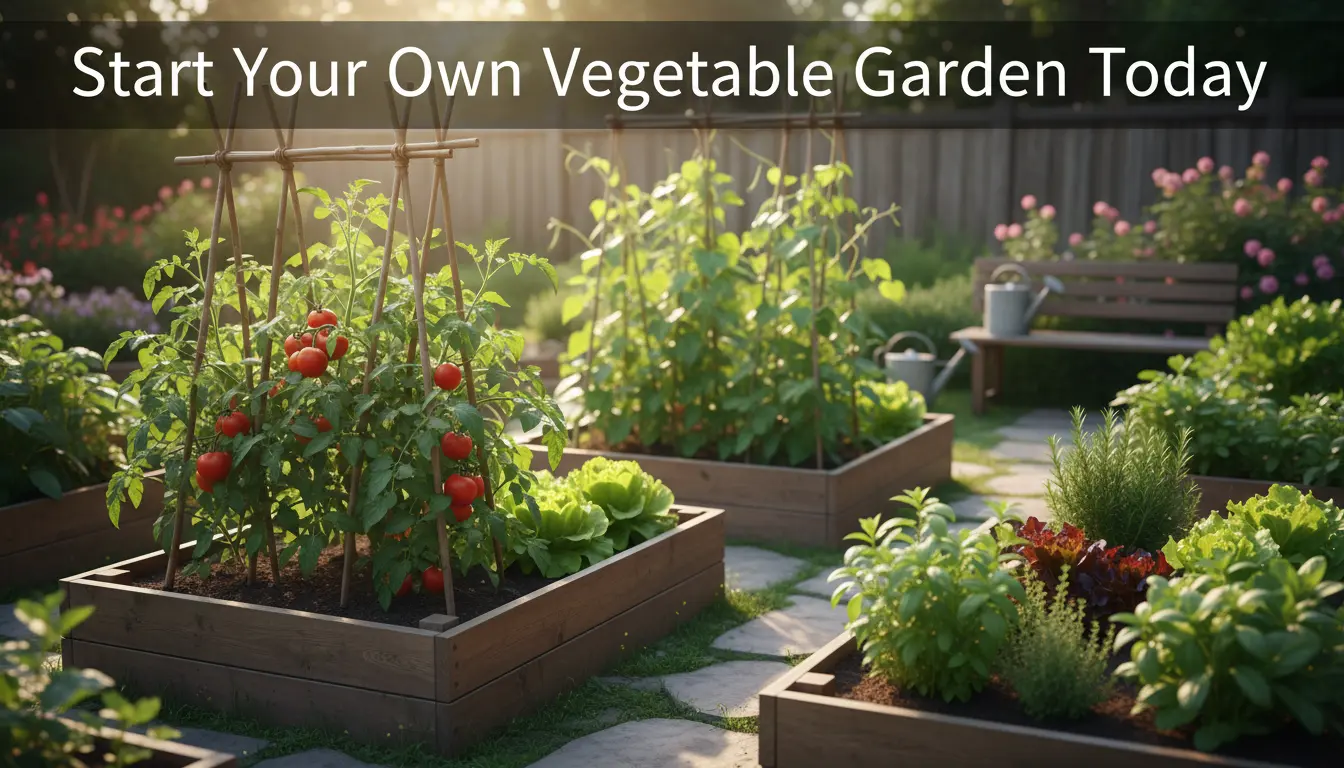
Starting a vegetable garden is a practical way to grow fresh food, save money, and enjoy time outdoors. This guide covers the basics you need to plan, plant, and maintain a productive garden, even with limited space.
Choose the Right Site to Start a Vegetable Garden
Location determines much of your garden’s success. Look for a spot with at least 6 hours of direct sunlight per day for most vegetables.

Consider access to water, drainage, and proximity to your kitchen for easy harvests.
Sunlight and Soil Considerations
Test sunlight at different times of day. Morning sun with afternoon shade can work for leafy greens, while tomatoes and peppers need full sun.
Check soil texture: loamy soil that drains but holds moisture is ideal. If your soil is heavy clay or sandy, raised beds or amended soil are good options.
Plan Your Garden Layout and Crops

Decide between in-ground beds, raised beds, or containers. Each has pros and cons depending on soil and mobility.
Start with a small, manageable area — a 4 x 8 foot raised bed or a few containers minimizes maintenance while you learn.
Choosing Easy Vegetables for Beginners
Begin with reliable, low-maintenance crops. Good choices include:
- Lettuce and other leafy greens
- Radishes and carrots
- Bush beans
- Tomatoes (determine determinante vs indeterminate)
- Herbs like basil, parsley, and chives
Prepare Soil and Planting Schedule

Soil preparation is the single most important step. Remove weeds, break up clods, and add organic matter like compost.
Aim for a soil pH between 6.0 and 7.0 for most vegetables. A home soil test kit can help you adjust pH and nutrient needs.
When to Plant
Follow your local frost dates to schedule planting. Cool-season crops can go in earlier, while warm-season crops wait until after the last frost.
Stagger plantings (succession planting) to extend harvests: sow a small batch of lettuce every two weeks rather than all at once.
Watering, Fertilizing, and Mulching
Consistent watering is key. Most vegetables need about 1 inch of water per week, delivered deeply and evenly.
Use drip irrigation or soaker hoses to reduce disease and conserve water. Avoid overhead watering late in the day.
Feeding Your Plants
Apply a balanced organic fertilizer at planting and again mid-season for heavy feeders like tomatoes.
Mulch with straw or shredded leaves to retain moisture, suppress weeds, and moderate soil temperature.
Pest and Disease Management for a Vegetable Garden
Adopt integrated pest management: prevention, monitoring, and targeted action. Start with cultural controls like crop rotation and clean spacing.
Hand-pick large pests, use row covers for seedlings, and choose resistant varieties where possible.
When to Use Organic Controls
Use organic sprays such as insecticidal soap or Bacillus thuringiensis for specific problems. Always follow label instructions and test on a small patch first.
Maintenance Tasks and Harvesting
Weekly maintenance keeps your garden productive. Tasks include weeding, checking for pests, staking or trellising, and harvesting ripe produce.
Harvesting at the right time improves taste and encourages more production, especially with crops like beans and summer squash.
Small Real-World Case Study
Case Study: A 100 sq ft Raised Bed
Emily, a city gardener, converted a 10 x 10 foot corner into two 4 x 8 raised beds. She amended the soil with compost and planted tomatoes, basil, lettuce, and beans.
In her first season she harvested enough salad greens for two people most weeks and 20 pounds of tomatoes. Her weekly routine was 30 minutes of watering and 15 minutes of weeding, which fit easily into her schedule.
Quick Checklist to Start a Vegetable Garden
- Pick a sunny site with water access
- Decide on beds or containers
- Test and amend soil with compost
- Choose easy crops for your season
- Set a planting and watering schedule
- Use mulch and integrated pest management
Companion planting, such as growing basil near tomatoes, can improve flavor and reduce some pests. Many herbs and flowers act as natural insect repellents.
Final Tips for New Gardeners
Start small and keep records. Note planting dates, varieties, yields, and any problems. This simple log helps you improve each season.
Join local gardening groups or seed exchanges to learn region-specific tips and save money on seeds and plants.
With a practical plan, basic soil care, and regular maintenance, you can start a vegetable garden that produces healthy food and fits your lifestyle. Begin with a small, well-prepared area and expand as you gain confidence.