
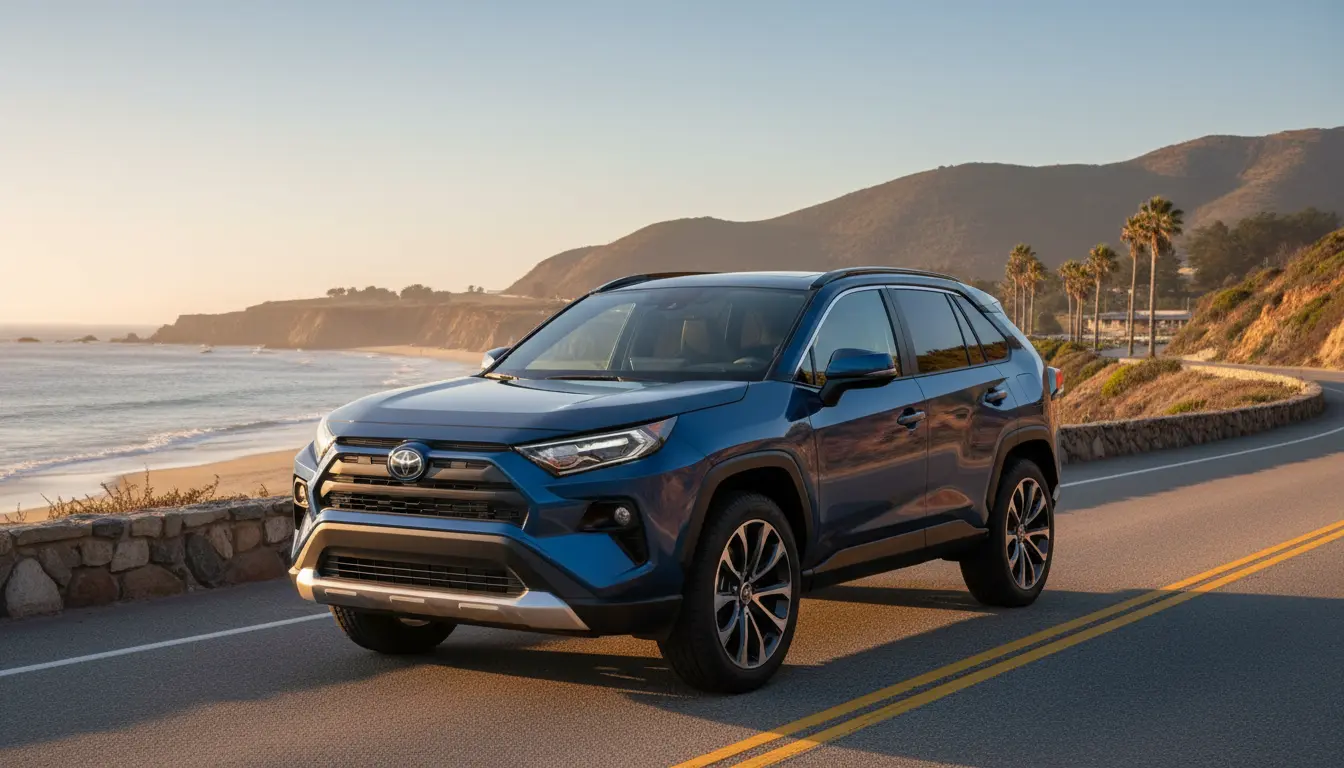
What to Expect from the Toyota RAV4 2026 Redesign
The Toyota RAV4 2026 is positioned as a generational update rather than a simple refresh. Early reports and spy photos point to a more aerodynamic exterior and a slightly larger footprint for improved interior space.
Toyota aims to refine styling, increase cabin quality, and add new powertrain choices while keeping the RAV4’s reputation for reliability and resale value. Expect sharper lines, revised lighting signatures, and updated wheel designs across the lineup.
Toyota RAV4 2026 Features Overview

This model year focuses on three priorities: comfort, connectivity, and efficiency. Many features will be standard or widely available across trims that were previously limited to higher levels.
Key headline features likely include upgraded infotainment, improved driver aids, and refreshed interior materials to create a more refined driving experience.
Standard and Available Features
- Large central touchscreen (likely 10–12 inches) with wireless Apple CarPlay and Android Auto.
- Digital instrument cluster options and configurable driver displays.
- Improved seat materials, more soft-touch surfaces, and optional ambient lighting.
- Expanded wireless charging and USB-C ports for rear passengers.
Interior and Technology in Toyota RAV4 2026
The interior layout emphasizes ergonomics and simple controls. Toyota is expected to reduce physical buttons in favor of a streamlined touchscreen interface while keeping key tactile controls for climate and driving modes.

Rear passenger comfort will improve with increased legroom in some trims, and cargo capacity is likely to be slightly higher thanks to a revised rear floor and storage solutions.
Connectivity and UX Improvements
Expect faster processing for infotainment, over-the-air updates, and enhanced voice recognition. Toyota’s connected services may expand to include remote software upgrades and more personalization settings.
Toyota has steadily increased hybrid adoption in the RAV4 family. The 2026 model is expected to continue offering multiple hybrid options, making it one of the most fuel-efficient compact SUVs without going fully electric.
Performance and Efficiency for Toyota RAV4 2026

Performance will be split across conventional gasoline engines, improved hybrids, and possibly a plug-in hybrid (PHEV) with greater electric range. Toyota’s TNGA platform updates will improve ride comfort and handling balance.
Engine tuning is expected to focus on low-end torque and smoother throttle response to benefit daily driving and towing capability.
Powertrain Options
- Turbocharged 4-cylinder gasoline engine for base trims, tuned for efficiency.
- Updated hybrid systems combining a gasoline engine with electric motors for better fuel economy.
- Potential PHEV variant with an electric range of 30+ miles in real-world driving.
Safety and Driver Assistance in Toyota RAV4 2026
Toyota Safety Sense will expand with more advanced sensors and software. Expect improved adaptive cruise control, lane centering, and intersection assistance as part of a broader active safety suite.
Higher trims may offer more semi-autonomous features suitable for highway driving, while standard packages will focus on collision avoidance and pedestrian detection.
Practical Buying and Ownership Notes
If you plan to buy a Toyota RAV4 2026, consider which features matter most: fuel economy, technology, or towing. Trim selection will influence available powertrains and driver aids significantly.
Wait times for popular trims, especially hybrids and PHEVs, may be longer during initial production runs. Pricing will likely increase moderately compared with prior years due to added technology and improved materials.
What to Compare Before Purchase
- Gasoline vs hybrid fuel costs and expected savings over ownership.
- Trim-level features such as active safety packages and interior upgrades.
- Warranty coverage and availability of scheduled maintenance plans.
Case Study: Short-Term Real-World Preview
A regional fleet manager tested a near-production RAV4 2026 prototype during a week of mixed driving. The vehicle combined a hybrid powertrain with an upgraded suspension tune for smoother city rides and confident highway stability.
During a 200-mile mixed route including stop-and-go traffic and highway cruising, the prototype returned an estimated 40 mpg-equivalent, showing tangible improvements over earlier RAV4 hybrids. Drivers noted quieter operation and easier smartphone pairing with the new infotainment system.
Practical Tips for Buyers
Book a test drive focused on daily-use scenarios: parking, city acceleration, and a 30–60 minute highway run. Pay attention to sightlines, seat comfort, and infotainment responsiveness.
Check dealer inventory early or sign up for notifications of availability for your preferred trim. Consider a hybrid or PHEV if you frequently do city driving and want the best fuel economy.
Conclusion: Is the Toyota RAV4 2026 Worth Waiting For?
The Toyota RAV4 2026 is shaping up to be a sensible evolution with better interior quality, more advanced electronics, and refined powertrains. It should continue to serve buyers who want a reliable, practical compact SUV with modern tech.
If improved efficiency and updated safety features are priorities, waiting for the 2026 model makes sense. If you need a vehicle immediately, current RAV4 trims remain competitive and could offer good value as dealers clear older stock.