
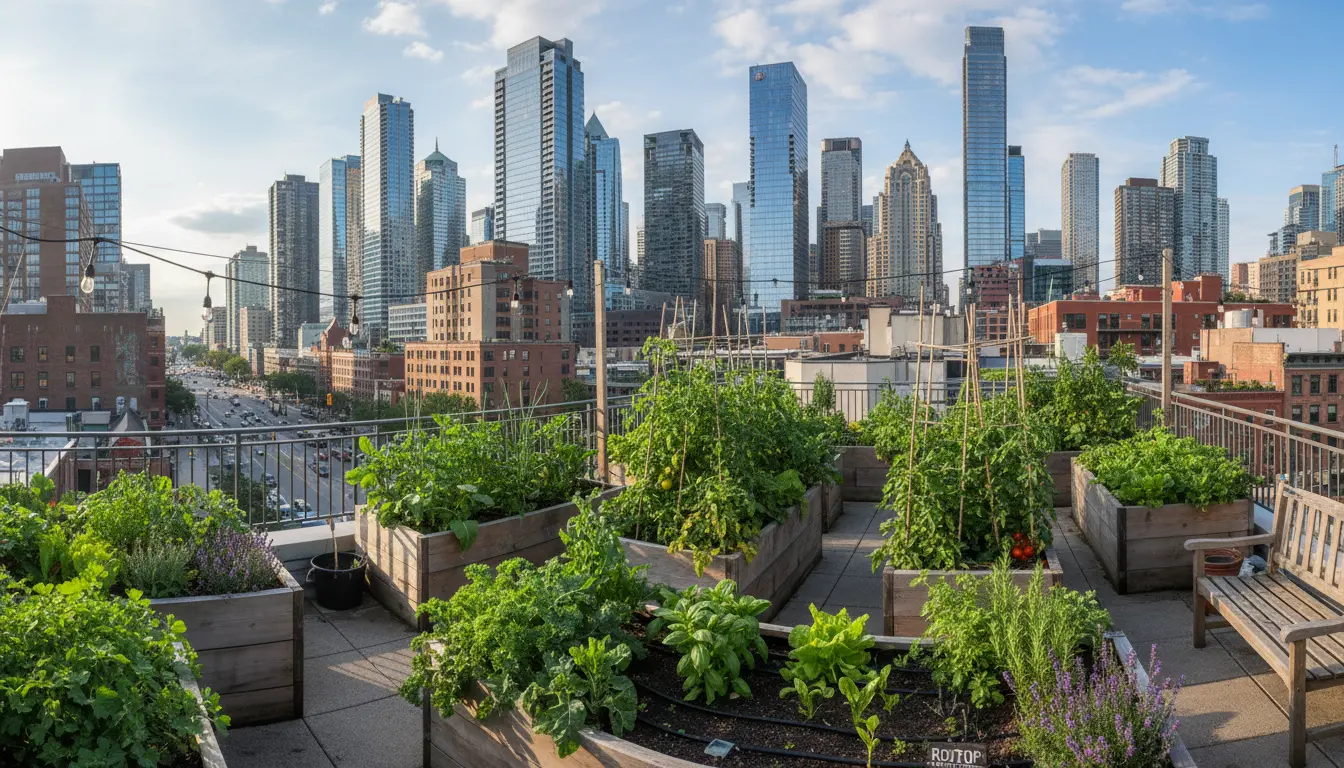
Start Smart With Urban Vegetable Gardening
Urban vegetable gardening lets you grow fresh food in small spaces like balconies, patios, or rooftops. This guide gives clear, practical steps for planning, planting, and maintaining a productive urban garden.
Planning Your Urban Vegetable Garden
Begin by assessing light, space, and access to water. Most vegetables need at least 6 hours of direct sun per day, so map sunny spots on your balcony or roof.

Choose plants based on space and season. Compact and fast-growing varieties suit small areas better than large, sprawling plants.
Choose the Right Site
Measure the available space and note sunlight hours. Consider wind exposure and structural load if using a rooftop or balcony.
Plan access for watering and harvesting. Ease of care encourages consistency, which boosts yields.
Select Vegetables for Small Spaces

Prioritize high-value or frequently used crops. Leafy greens, herbs, cherry tomatoes, radishes, and dwarf beans are reliable choices.
Use vertical space for vining crops like peas or indeterminate tomatoes to maximize area.
Containers and Soil for Urban Vegetable Gardening
Container choice affects root space, moisture retention, and mobility. Pick containers that fit your space and support the plants you select.

Use a well-draining, nutrient-rich potting mix rather than garden soil to avoid compaction and drainage problems.
Container Options
- Plastic or resin pots: Lightweight and retain moisture well.
- Ceramic or terracotta: Attractive but dry out faster; good for drought-tolerant crops.
- Grow bags: Affordable and provide air pruning for healthy roots.
- Raised beds or custom planters: Best for larger yields in tight spaces.
Soil Mix Recipe
A simple container soil mix: two parts high-quality potting mix, one part compost, and one part aeration material like perlite or coarse sand. This balances nutrients, drainage, and moisture retention.
Add slow-release organic fertilizer at planting and side-dress with compost or liquid feed during the season.
Watering, Light, and Feeding
Consistent water and proper light are the core of productive urban vegetable gardening. Containers dry out faster than ground beds and require more frequent checks.
Watering Tips
- Water deeply until excess drains from the pot bottom to encourage deep roots.
- Morning watering reduces evaporation and fungal risk.
- Consider drip irrigation or self-watering containers to reduce daily effort.
Light and Fertilizer
Ensure vegetables get at least 6 hours of sun. If light is limited, choose shade-tolerant crops and use reflective surfaces to increase brightness.
Feed plants every 3–4 weeks with a balanced organic fertilizer or use a liquid feed for quick uptake during active growth.
Pest and Disease Management for Urban Vegetable Gardening
Pests and diseases occur in urban gardens but are manageable with monitoring and cultural practices. Early detection reduces crop loss.
Preventive Steps
- Rotate crops in containers year to year when possible.
- Remove dead leaves and debris to lower disease pressure.
- Use physical barriers like row covers for insect control on young plants.
Organic Control Options
Hand-pick larger pests, use insecticidal soaps for soft-bodied insects, and apply biological controls like Bacillus thuringiensis for caterpillars when needed.
Avoid broad-spectrum pesticides that harm beneficial insects such as pollinators and predatory insects.
Harvesting and Succession Planting
Harvest regularly to encourage production and reduce pest attraction. Pick leafy greens when young for the best flavor and harvest fruiting crops when fully ripe.
Practice succession planting: sow quick crops like radishes or lettuce between slower crops to maintain continuous harvests.
Small Real-World Example
Case Study: A two-person apartment used a 6-foot balcony to grow vegetables. They installed three 12-inch pots, two vertical trellises, and a 3-foot planter box. Their planting plan included cherry tomatoes, basil, lettuce, and bush beans.
Outcome: By choosing compact varieties and rotating lettuce with radishes, they harvested fresh salad greens weekly and a steady supply of basil and tomatoes through the season, reducing grocery produce purchases by about 30 percent.
Quick Checklist for Urban Vegetable Gardening
- Assess light and space for at least 6 hours of sun.
- Choose compact or vertical varieties suited to containers.
- Use a high-quality potting mix with compost and aeration material.
- Water deeply and consistently; consider drip systems or self-watering containers.
- Fertilize regularly and monitor for pests weekly.
- Practice succession planting to maximize yield in limited space.
Conclusion
Urban vegetable gardening is practical and rewarding with the right planning and care. Focus on light, container choice, soil quality, and consistent watering to build a productive small-space garden.
Start with a few easy crops, refine your system over a season, and expand as you gain confidence and experience.